
The headline number for the gender pay gap in 2026 sits at roughly 84 cents on the male dollar across the full-time workforce in the United States and 87 pence on the pound in the United Kingdom, according to the most recent figures from the Office for National Statistics and the Bureau of Labour Statistics. Both numbers are roughly half a point better than the equivalent figures from 2024, a movement that is real but slower than most advocacy groups are claiming and faster than most sceptics are willing to acknowledge.
The headline number is also a poor summary of what is actually happening. The gap behaves very differently across sectors, age groups, and geographic regions, and the policy interventions that have produced the most measurable movement are not the ones that get the most political attention. What follows is a working summary of where the data sits in the spring of 2026, what has shifted, and what has not.

The numbers, broken out
The 84 cents headline figure in the US compares median weekly earnings of women working full time to those of men working full time. When the same comparison is made on an hourly basis, the figure tightens to about 89 cents. When the comparison is restricted to workers in the same occupation, with the same education, the same years of experience, and the same hours, the residual unexplained gap is about 6 to 8 cents. That residual is the slice that captures direct pay discrimination, plus everything not measured by the controls.
The UK headline of 87 pence is on a different methodology — gross hourly pay, full time only, median. The like-for-like residual gap in the UK is similar to the US, between 5 and 8 pence.
The age pattern is the same on both sides of the Atlantic and has held steady for thirty years. The gap is small in the twenties — women under 30 are paid roughly 95 to 97 per cent of men under 30. It widens sharply through the thirties as families form. By the late forties it has reached its broadest point. It narrows again in the fifties as men retire earlier and women remain in the workforce longer.
What moved between 2024 and 2026
Three changes have driven the half-point compression in the headline figure.
The first is the continued spread of pay transparency legislation in the US. California, Colorado, Washington, New York, and as of January 2026 Massachusetts now require salary ranges to be disclosed in job postings. The published research on these laws — most rigorously by Cullen, Pakzad-Hurson, and Perez-Truglia at Berkeley — shows that pay transparency closes between 0.4 and 0.7 percentage points of the gap within two years of implementation. The mechanism is not particularly subtle: women apply at the top of the disclosed range rather than the middle, and managers can no longer compress female salaries through opaque offer-making.
The second is the expansion of paid parental leave for fathers. Several large employers — Microsoft, Goldman Sachs, the BBC — moved to fully paid, non-transferable paternity leave during 2024 and 2025. The empirical evidence from Sweden and Norway, where the policy has been in place for decades, suggests that take-up of father's leave is the single most effective workplace policy for closing the motherhood penalty, which is the largest component of the post-30 widening of the gap. The US data is too new to measure, but the UK data shows a small movement on the right curve.
The third is the gradual erosion of the negotiation gap. Recent research by Hannah Riley Bowles and her colleagues at Harvard has shown that the historical penalty women paid for assertive salary negotiation — the so-called backlash effect — has roughly halved in the past decade. Younger managers, on average, no longer penalise women who negotiate the way managers of a generation ago did. This is a slow change, but it is moving in the right direction and is one of the few areas where the cultural shift has produced measurable economic improvement.
What has not moved
The motherhood penalty itself, separate from paternity leave, has barely shifted. Women in the United States lose roughly 4 to 5 per cent of their lifetime earnings per child, according to the latest analysis by Henrik Kleven and colleagues. The UK figure is similar. The penalty has held remarkably steady across two decades, despite enormous attention. The combination of reduced hours, time out of the workforce, and the so-called child penalty in promotions explains nearly all of the post-30 widening of the gap.
Occupational segregation has also barely moved. Women remain heavily over-represented in lower-paid sectors — childcare, primary education, retail, social care — and under-represented in higher-paid sectors such as engineering, finance, and senior management. The composition of the workforce by sector explains a meaningful portion of the headline gap, and the composition has changed only marginally in the past five years. STEM enrolment among women has crept up slowly. The pipeline from STEM education to STEM careers has improved somewhat. But the headline workforce composition is not a story of rapid change.
The interventions that produce measurable movement
Three policies have repeatedly shown the strongest effects in randomised or quasi-experimental studies.
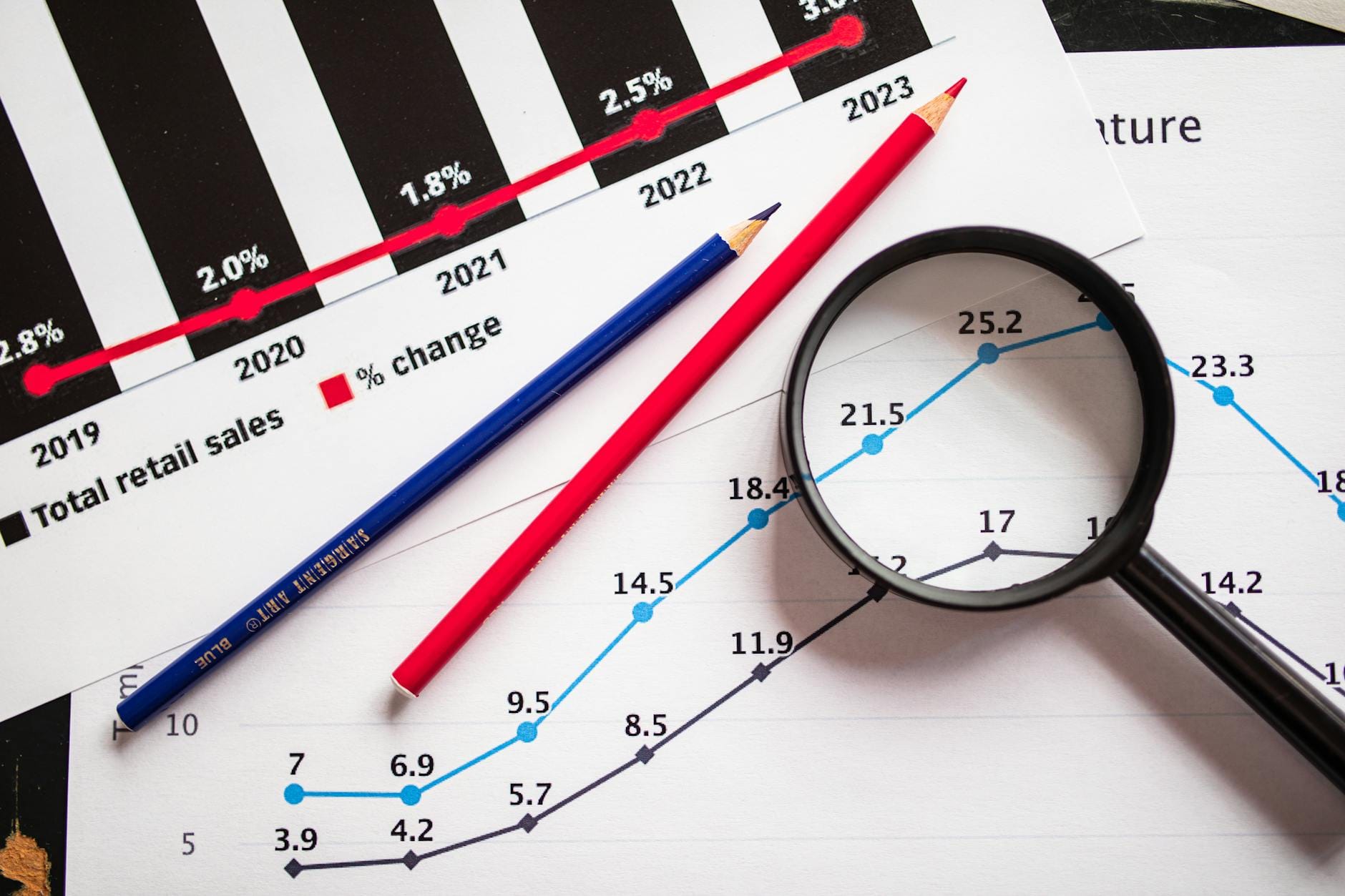
Pay transparency at the level of public salary ranges in job postings produces measurable compression within two years. The mechanism is downward pressure on the top of ranges that men negotiate into, and upward pressure on the bottom of ranges that women historically accept.
Mandatory pay-gap reporting at the company level — the UK introduced this in 2017 — produces a smaller but measurable effect. Companies above 250 employees in the UK now publish their gaps annually. The reputational pressure has driven roughly a 0.6 percentage-point compression in the gap at large reporting employers, compared to similar firms below the threshold.
Paid, non-transferable paternity leave — the use-it-or-lose-it model — produces the strongest effect on the motherhood penalty. The Nordic data is over twenty years deep. The US and UK data is still accumulating, but the early signals suggest the mechanism transfers across cultures.
What is on the horizon for 2026 and 2027
Several legislative changes are expected to affect the data over the next eighteen months. The federal Paycheck Fairness Act is moving through Congress with bipartisan support for the first time in five years. The EU Pay Transparency Directive, which takes full effect across member states in mid-2026, will mandate pay transparency at a scale that dwarfs the existing US patchwork. The UK is consulting on extending mandatory reporting to companies with 50 to 250 employees, which would expand the coverage of pay-gap reporting roughly fivefold.
None of these changes will produce immediate movement in the 2026 headline number. The data lag for pay-gap measurement is typically 12 to 18 months, and behavioural responses to new legislation take a similar interval to settle. The 2028 numbers will be the first to show the combined effect, and the consensus modelling suggests a further compression of roughly one to two percentage points if implementation goes as planned.
The honest framing of the gap in 2026 is that it is moving — slowly, unevenly, and not in the ways that get the most attention. The interventions that work are quieter than the slogans, and the public conversation tends to attach itself to the wrong levers. The boring policies — transparency, mandatory reporting, paternity leave — keep producing the measurable movement, year after year, while the more performative interventions produce headlines and very little else.