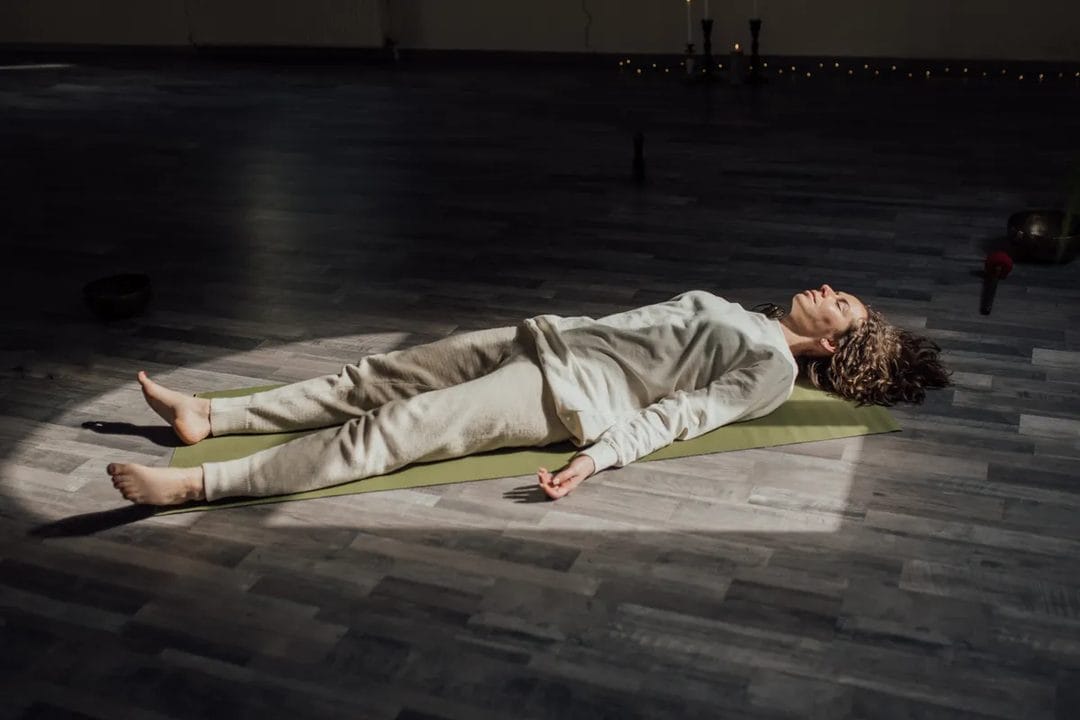
Kristin Jackson runs a boutique gym in Waynesville, North Carolina, and on a recent Tuesday she was leading a Zoom class that looked, from the outside, like a room full of women taking a nap. Bodies were folded into fetal position, knees tucked, faces slack. Nobody was sweating. Nobody was counting reps. One participant later joked to a friend that she felt like she was "Zooming with a bunch of napping ladies" — and she wasn't wrong, except that everyone in that grid was, technically, exercising. They were working through contralateral patterning: tiny, deliberate clenches and releases of the pelvis, the sternum, the shoulders, repeated until something in the body actually shifts. This is a somatic workout, and it has become one of the more unlikely fitness stories of 2026 — a class built almost entirely around holding still.
What "somatic" actually means, and what it doesn't
The word gets thrown around loosely on TikTok, attached to everything from bedtime stretching routines to vague "release your trauma" captions, so it's worth being precise about where it comes from. Somatic movement traces back to practitioners like Thomas Hanna, who coined "somatics" in the 1970s to describe exercises that retrain the nervous system's control over muscle tension rather than simply stretching the muscle itself, and it later absorbed ideas from Peter Levine's Somatic Experiencing work on trauma and the body. Bessel van der Kolk's 2014 book "The Body Keeps the Score" is the text most somatic instructors cite when explaining why stress shows up as physical tightness rather than just a mental state — it spent years on bestseller lists precisely because it gave a scientific-sounding vocabulary to something people already felt in their shoulders.
What separates a somatic class from a slow yoga flow or a foam-rolling session is the intention behind each movement. In a typical session you're not stretching a hamstring to increase range of motion — you're sensing, from the inside, how a muscle is already holding tension, and then contracting and releasing it in tiny increments until your nervous system registers that it's safe to let go. Jackson describes it to new clients this way: "The world thinks we should stretch and force change. Somatics means tuning in and sensing what you're doing, and learning how to release your muscles." That distinction — sensing before forcing — is the whole trend in one sentence, and it's also why somatic classes look so strange to anyone used to a normal gym floor.
Why this is surging now, specifically
Google search interest in "somatic exercise" has climbed enough in 2026 that outlets from Marie Claire UK to the Wall Street Journal have run explainers on it within weeks of each other, and TikTok's #somaticworkout tag is closing in on 30 million views. None of that happened in a vacuum. It's landing directly on top of a decade of HIIT-and-hustle fitness culture — Peloton leaderboards, Barry's Bootcamp red rooms, Orangetheory heart-rate zones — that promised transformation through intensity and, for a lot of women, delivered burnout instead. Somatic work is explicitly the inverse pitch: instead of chasing an elevated heart rate, you're trying to activate the parasympathetic nervous system, the "rest and digest" state that high-intensity training deliberately overrides. The stress hormone most often name-checked in these classes is cortisol, and the working theory instructors repeat is that chronically elevated cortisol from constant high-output training — plus the rest of a stressful week — keeps the body locked in a low-grade fight-or-flight loop that no amount of extra spin class actually resolves.
There's a demographic story underneath the search-trend story, too. Somatic classes are disproportionately marketed to and attended by women in their thirties and forties, the same cohort that has spent the past few years cycling through cortisol-face TikToks, magnesium-for-sleep recommendations, and "nervous system regulation" content generally. That's not a coincidence — it's the same audience that got told for a decade to optimize every part of the day, including the workout, and is now visibly tired of it.
What an actual session looks like
Strip away the branding and a 45-minute somatic class usually runs through a predictable arc: a few minutes lying on your back doing pandiculation — the same full-body stretch-and-release a cat does after a nap, which is where the term originates — followed by isolated work on one area at a time. A section on the pelvis might involve tilting it a centimeter forward and back, dozens of times, at a pace so slow it looks like nothing is happening on camera. Instructors then move to the ribcage, the shoulders, sometimes the jaw, closing with several minutes of total stillness that's meant to let the nervous system register the change. There's rarely music with a strong beat. There's almost never a mirror wall. And unlike a Pilates reformer class, there's no equipment to buy beyond a yoga mat you probably already own.
That absence of equipment is part of the appeal, but it also means the format resists the retail engine that usually props up a fitness trend — no proprietary machine, no branded app subscription required, which is one reason gyms have been slower to build dedicated studios around it than they were for, say, Lagree or reformer Pilates.
The part worth being skeptical about
Somatic movement has real mechanistic backing for reducing muscle tension and improving body awareness — that's not controversial. What's shakier is the broader claim, repeated constantly in the trend's marketing, that a 20-minute floor routine can meaningfully lower cortisol or resolve stored trauma the way a therapist or a doctor would. The research base here is mostly small studies and self-report surveys, not the kind of large randomized trials that back, say, cardiovascular exercise recommendations. A somatic class can absolutely help you notice a habitually clenched jaw or a locked-up lower back. It is not a substitute for treating an anxiety disorder, and the instructors worth listening to say so directly instead of implying their floor routine is doing the work of a trauma specialist.
Whether it's worth your time
If you're already doing strength training or cardio you enjoy, adding one somatic session a week as a genuine recovery day — not a guilt-free excuse to skip the gym entirely — is a reasonable trade, and it's a better recovery choice than another 30 minutes of scrolling on the couch. Skip the $200-a-month boutique studio membership until you've tried it somewhere cheaper: The Class by Taryn Toomey runs digital sessions with a somatic-adjacent format for under $20 a month, and plenty of certified somatic instructors post full-length classes on YouTube for free. What doesn't make sense is treating a somatic class as your only form of movement for the week. The parasympathetic-nervous-system argument for slowing down is real, but so is the evidence for resistance training's effect on bone density and metabolic health as women move through their thirties and forties — and no amount of pelvic tilting replaces that.
Try one class before deciding whether the hype matches the experience. Some people lie down for 45 minutes and feel a shoulder unclench for the first time in months. Others spend the whole session mentally drafting their grocery list, wondering when the "workout" part starts.